Billy wallson
Senior DirectorEmbracing patina, tarnish, and gentle decay as design features rather than flaws in a cozy gothic interior.
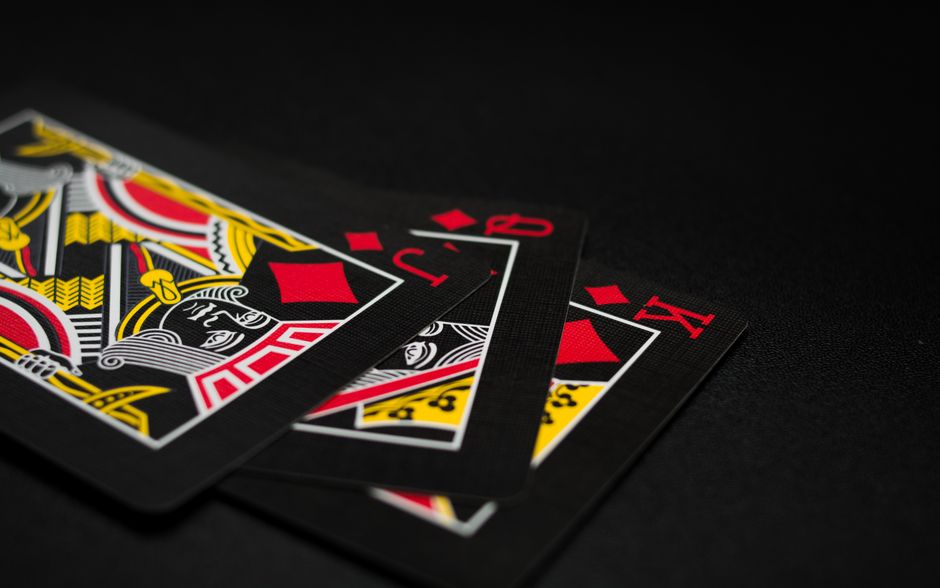
Ask ten slot players what RTP means and you'll get ten different answers, most of them wrong. The number is printed right there in the game info screen—96.5%, 94%, sometimes a brutal 88%—yet very few people understand what those digits actually promise. If you've ever wondered why a 96% game can still drain your balance in twenty minutes flat, this is for you. Let's pull back the curtain on the math that governs every spin.
RTP stands for Return to Player, and it's expressed as a percentage of all money wagered on a game that gets paid back to players over the long run. A 96% RTP slot keeps 4% as house edge. Simple enough. Here's the part that trips people up: that 96% is calculated over millions of spins, not over your session, your week, or your lifetime.
Think of it like a giant swimming pool. Every player everywhere feeds coins in, and 96% of those coins flow back out to someone. But there's no rule saying the someone has to be you. Variance—the wild swings between wins and losses—is what makes individual sessions feel nothing like the theoretical average. A game with 96% RTP might run at 130% for one player and 60% for another across the same 500 spins. Over billions of spins, it converges. Over your Sunday evening, it absolutely does not.
Common RTP ranges you'll encounter at reputable operators:
If RTP is the long-term tidal pattern, volatility (or variance) is the wave height. Two slots can both boast 96% RTP and play completely differently.
Low-volatility games pay small, frequent wins. Your balance erodes slowly, sessions last longer, and the adrenaline is muted. High-volatility games pay rarely but massively—a single bonus round might return 500x your stake. Some players love the hunt; others find the dry spells unbearable.
Here's the practical rule: pick volatility to match your bankroll and temperament, not your hopes. A $50 bankroll on a high-volatility slot with $2 spins is math against you—the likelihood of busting before hitting a meaningful win is substantial. Same bankroll on a low-volatility game at $0.20 spins gives you hundreds more attempts. A good place to continue is สล็อต.
Slots aren't the only game in town, and their edges aren't representative. If squeezing value matters to you, the math varies wildly across formats:
Notice the spread. A player grinding blackjack at 0.5% edge is playing a fundamentally different financial game than someone feeding a 90% RTP keno machine. Neither is "wrong"—entertainment value is subjective—but the costs differ by an order of magnitude.
Poker is the outlier here. Against other players, your edge isn't set by the house—it's set by skill relative to the table. The house takes a rake (typically 5% capped at $3–$5 per pot at low stakes), and everything above that depends on you. A strong player can be profitable; a weak one can lose far faster than any slot would take.
Sports betting operates on margin, not RTP. A bookmaker building a market will set odds so the implied probabilities across all outcomes sum to slightly above 100%—the overround, usually 4% to 7% on major markets and much higher on niche ones. Player props, corner kicks, and obscure leagues often carry 10%+ margins.
Practical takeaways worth remembering:
You can't beat luck, but you can stop playing against yourself. A few concrete habits separate informed players from impulse players:
RTP and house edge don't tell you what will happen tonight. They tell you what happens over time to everyone who plays—and that's still an immensely useful thing to know. Choosing a 96.5% RTP slot over an 88% one won't make you win, but it makes every spin a slightly better proposition. Over thousands of spins, that gap becomes real money. The players who survive longest in iGaming aren't the luckiest—they're the ones who understood the terms before they sat down, respected volatility, and treated every session as paid entertainment rather than a financial plan. The math doesn't guarantee you anything. But ignoring it guarantees you pay more for the same experience.
From crushed velvet throws to yellowed lace curtains, the right fabrics can make any room feel like a forgotten manor library.

Using candles, incense, dried botanicals, and subtle home fragrances to build a warm, layered atmosphere without overwhelming the senses.
A guide to arranging vintage finds, natural specimens, and small treasures into a display that feels like a Victorian collector's study.

Discover how faded florals, damask patterns, and layered paint finishes can give your walls the depth of a century-old home.

Embracing patina, tarnish, and gentle decay as design features rather than flaws in a cozy gothic interior.

From crushed velvet throws to yellowed lace curtains, the right fabrics can make any room feel like a forgotten manor library.
Copyright © 2026 Cobweb and Candle. All Rights Reserved.




Roseanne Williams
Sep 8, 2026 ReplyLearn how to turn harsh overhead lighting into a soft, mysterious glow that makes every corner of your home feel like a Victorian parlor.