Billy wallson
Senior DirectorEmbracing patina, tarnish, and gentle decay as design features rather than flaws in a cozy gothic interior.
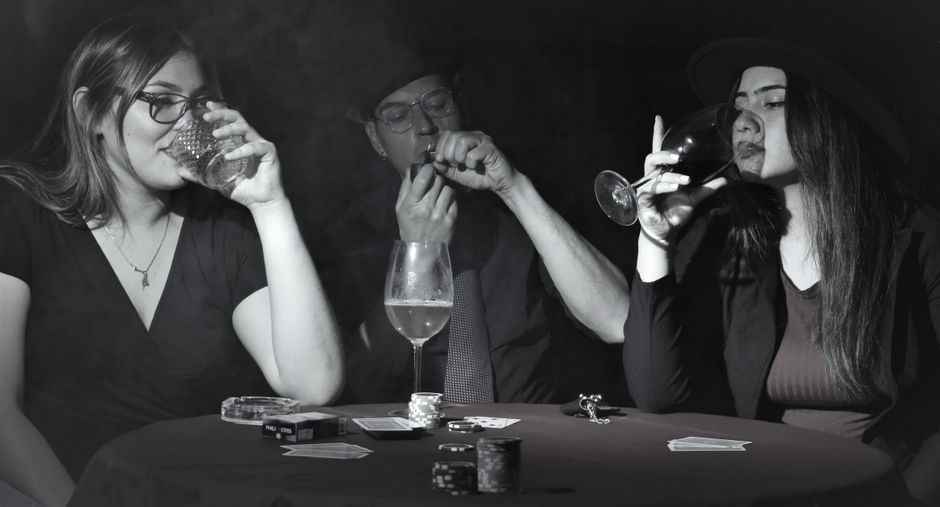
You’ve seen the flashy ads, the neon-lit casinos, and the endless streams of poker pros on YouTube. But behind the glitz, iGaming is a multi-billion-dollar industry built on math, psychology, and a fair dose of luck. Whether you’re spinning slots at 2 a.m., grinding a poker tournament, or placing a cheeky accumulator on the weekend, there’s a right way and a wrong way to play. And no, the right way isn’t just “quit while you’re ahead” — that’s lazy advice. Let’s dig into what actually separates a fun, sustainable hobby from a wallet-draining disaster.
Slot machines are the bread and butter of any online casino. They’re simple, visually addictive, and require zero skill. But that simplicity hides a brutal mathematical truth. Every spin is governed by a Random Number Generator (RNG), and the house edge is baked into the game’s Return to Player (RTP) percentage.
Take a typical online slot like Starburst — RTP 96.1%. That means for every $100 wagered, the machine is programmed to pay back $96.10 over millions of spins. The casino keeps $3.90. Sounds small, right? Now multiply that by thousands of spins. That’s the house edge working silently against you.
But here’s what most players miss: RTP isn’t the whole story. Volatility (or variance) determines how those payouts are distributed. A low-volatility slot like Blood Suckers (RTP 98%) pays small, frequent wins. High-volatility monsters like Bonanza (RTP 96%) can go hundreds of spins without a payout, then smash you with a 10,000x win. Which is better? Neither — it depends on your bankroll and patience.
Pro tip: Never chase a slot’s “due” payout. RNGs have no memory. A machine that hasn’t paid in 500 spins is no more likely to pay on the 501st than it was on the first.
Unlike slots, poker is a game of decisions. You can be the best player at the table and still lose a hand — or even a tournament — to a donkey who calls your all-in with 7-2 offsuit and flops two pair. That’s variance. But over 100,000 hands, the skilled player wins. Period.
The key to poker profitability isn’t fancy bluffs or Hollywood hero calls. It’s bankroll management and table selection. If you’re playing $2/$5 No-Limit Hold’em with a $500 bankroll, you’re not playing poker — you’re gambling. Standard rule: have at least 20 buy-ins for cash games (so $2,000 for $1/$2) and 50-100 buy-ins for tournaments.
Also, stop playing every hand. In a full-ring game, you should be folding 80-85% of your starting hands. That means folding A-9 offsuit from early position, folding K-10 suited when a tight player raises, and folding pocket 5s to a 3-bet. Boring? Yes. Profitable? Absolutely.
And remember: online poker is not rigged. The sites make money from rake, not from stacking decks. If you think it’s rigged, you’re probably just losing — and that’s a skill issue, not a conspiracy.
Sports betting is where casual fans lose the most money because they bet with their hearts. “My team is due a win!” No, they’re not. Sports outcomes are independent events. The bookmaker’s odds already reflect public bias, injuries, weather, and statistical models. See slot deposit dana for a side-by-side comparison.
If you want to bet for fun, fine. But if you want to bet with an edge, you need to think like a trader. Here are three approaches that actually work:
What doesn’t work? Parlays with 10 legs. The house edge compounds with every selection. A 10-leg accumulator at -110 odds each has an effective house edge of over 30%. You’re better off playing roulette.
Every experienced player will tell you the same thing: bankroll management separates winners from losers. It’s not about how much you win — it’s about how much you can afford to lose.
Set a monthly budget. Example: $200 for iGaming. Split it: $80 slots, $80 poker, $40 sports betting. If you lose the $80 slots budget, stop playing slots. Don’t dip into poker money. This prevents the dreaded “chase losses” spiral.
Also, use stop-loss limits. If you’re down 50% of your session bankroll, walk away. The game will still be there tomorrow. Casinos love players who play on tilt because they make emotional, -EV decisions.
iGaming isn’t a get-rich-quick scheme. It’s entertainment with a cost — just like going to a movie or a concert. The difference is that with skill, discipline, and a bit of math, you can actually come out ahead. But the moment you treat it as a guaranteed income stream, you’ve already lost.
So next time you fire up a slot, sit at a poker table, or place a bet, ask yourself: Am I playing for fun, or am I chasing something? If it’s the former, enjoy the ride. If it’s the latter, close the tab and go for a walk. Your future self will thank you.
From crushed velvet throws to yellowed lace curtains, the right fabrics can make any room feel like a forgotten manor library.

Using candles, incense, dried botanicals, and subtle home fragrances to build a warm, layered atmosphere without overwhelming the senses.
A guide to arranging vintage finds, natural specimens, and small treasures into a display that feels like a Victorian collector's study.

Discover how faded florals, damask patterns, and layered paint finishes can give your walls the depth of a century-old home.

Embracing patina, tarnish, and gentle decay as design features rather than flaws in a cozy gothic interior.
From crushed velvet throws to yellowed lace curtains, the right fabrics can make any room feel like a forgotten manor library.
Copyright © 2026 Cobweb and Candle. All Rights Reserved.




Roseanne Williams
Sep 8, 2026 ReplyLearn how to turn harsh overhead lighting into a soft, mysterious glow that makes every corner of your home feel like a Victorian parlor.